为了精进自己的后端开发能力,打算深入陈硕大佬的 muduo 项目,学习网络编程中的Reactor 多线程并发模型,如何处理高并发的情况。
动起来!#
我们在拆解“发动机”之前,不妨先看看这个“发动机”动起来是什么样的:
1. 安装依赖#
sudo apt-get update
sudo apt-get install git cmake g++ gcc
# 安装 boost 库
sudo apt-get install libboost-dev libboost-test-dev libboost-program-options-dev libboost-system-dev libboost-filesystem-dev2. 下载并编译#
陈硕老师提供了编译脚本
# 克隆仓库
git clone https://github.com/chenshuo/muduo.git
cd muduo

# 运行构建脚本
./build.sh3. 看一下效果#
我们以老师提供的例子之一 Echo Server(回显服务器,你发什么他回什么)来看一下效果:
建立服务端:
./echoserver_unittest建立客户端:
nc 127.0.0.1 2000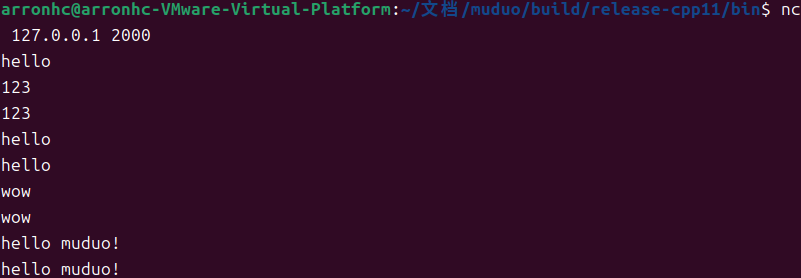 可以看到,这是个回显服务器~
解剖#
下一步,我们要了解这背后的原理,其大致由一下核心部分组成,我们用银行来举例子:
- EventLoop:银行的大堂经理,用来唤醒柜台干活,一个银行有且仅有一个大堂经理
- Poller:取号机,客户从这里取号,知道要去哪个柜台处理业务
- Channel:处理具体事务 这里需要说明的是,Channel 本身不处理事务,比方说客户要来存钱,Channel 只负责按下“存钱”按钮,至于按钮控制的是“存钱”还是发射核弹,Channel 一概不知
- TcpConnection:这是负责把具体操作绑定到“按钮”上的人,Channel 把状态传过来之后,TcpConnection 只负责把“包裹”拿进来放到
InputBuffer中,然后告诉User有你的包裹!放在InputBuffer了,接收时间是 xx!TcpConnection 仍然不知道这个包裹装的是什么,只管接收就好了。
此外,我们还需要了解主线程、子线程群:
- 主线程:银行总门口,只进行“迎宾”(Accept)操作,把客户领进门后直接分发到子银行
- 子线程群:负责具体业务的银行,也就是上面我们提到的这些业务
这样,我们就实现了完整的流程。下面,我们看一下每个核心的核心代码:
Eventloop#
这段代码是 muduo 的绝对核心,所有的操作都是在这个死循环中进行的,是子线程群的业务逻辑。
void EventLoop::loop()
{
  assert(!looping_);
  assertInLoopThread();
  looping_ = true;
  quit_ = false;  // FIXME: what if someone calls quit() before loop() ?
  LOG_TRACE << "EventLoop " << this << " start looping";

  while (!quit_)
  {
    activeChannels_.clear();
    pollReturnTime_ = poller_->poll(kPollTimeMs, &activeChannels_);
    ++iteration_;
    if (Logger::logLevel() <= Logger::TRACE)
    {
      printActiveChannels();
    }
    // TODO sort channel by priority
    eventHandling_ = true;
    for (Channel* channel : activeChannels_)
    {
      currentActiveChannel_ = channel;
      currentActiveChannel_->handleEvent(pollReturnTime_);
    }
    currentActiveChannel_ = NULL;
    eventHandling_ = false;
    doPendingFunctors();
  }

  LOG_TRACE << "EventLoop " << this << " stop looping";
  looping_ = false;
}
我们来拆解这段绝对核心:
1. 阻塞与等待(The wait)#
pollReturnTime_ = poller_->poll(kPollTimeMs, &activeChannels_);- Eventloop 问:在最近
kPollTimeMs这段时间,有哪些窗口有事儿要做? - 假如没有事件,这个线程就会挂起,直到有“客户”再进行处理,而挂起的时候不占用 CPU
- 假如有事件,那么就会把需要进行业务的 Channels 收集到
activeChannels_中,再进行接下来的操作
2. 处理网络事件(The Action)#
for (Channel* channel : activeChannels_)
    {
      currentActiveChannel_ = channel;
      currentActiveChannel_->handleEvent(pollReturnTime_);
}其实很简单吧!一下就能看懂,遍历每个有事件的窗口,每个窗口“按一下对应的按钮”就可以了
3. 处理“任务队列”(The Pending Tasks)#
pending: 代办的
doPendingFunctors();Eventpoll在等待客户(休眠状态),但是这个时候另外一个线程想让这个这个线程干点事情,如何调用Eventpoll?就用这个函数: 外面的线程把任务塞到一个队列里,然后把Eventpoll叫醒,Eventpoll醒来之后,处理完网络事件,走到这里,就会把队列里的任务执行一遍
Channel#
Channel 只用考虑这个业务的状态就可以了,而不用管这个业务是什么,这个具体业务由 TcpConnection 负责
而这些状态是 Linux 中写死的东西,不会增不会减:
POLLIN(可读)、POLLOUT(可写)、POLLHUP(挂断)、POLLERR(错误)
void Channel::handleEventWithGuard(Timestamp receiveTime)
{
  eventHandling_ = true;
  LOG_TRACE << reventsToString();
  if ((revents_ & POLLHUP) && !(revents_ & POLLIN))
  {
    if (logHup_)
    {
      LOG_WARN << "fd = " << fd_ << " Channel::handle_event() POLLHUP";
    }
    if (closeCallback_) closeCallback_();
  }

  if (revents_ & POLLNVAL)
  {
    LOG_WARN << "fd = " << fd_ << " Channel::handle_event() POLLNVAL";
  }

  if (revents_ & (POLLERR | POLLNVAL))
  {
    if (errorCallback_) errorCallback_();
  }
  if (revents_ & (POLLIN | POLLPRI | POLLRDHUP))
  {
    if (readCallback_) readCallback_(receiveTime);
  }
  if (revents_ & POLLOUT)
  {
    if (writeCallback_) writeCallback_();
  }
  eventHandling_ = false;
}
Channel 要干的事情很无脑,就是个分类的活,在接到 Poller递过来的events 之后,去按对应的按钮就行了,至于具体的逻辑,我们留给 TcpConnection考虑
TcpConnection#
TcpConnection::TcpConnection(EventLoop* loop,
                             const string& nameArg,
                             int sockfd,
                             const InetAddress& localAddr,
                             const InetAddress& peerAddr)
  : loop_(CHECK_NOTNULL(loop)),
    name_(nameArg),
    state_(kConnecting),
    reading_(true),
    socket_(new Socket(sockfd)),
    channel_(new Channel(loop, sockfd)),
    localAddr_(localAddr),
    peerAddr_(peerAddr),
    highWaterMark_(64*1024*1024)
{
  channel_->setReadCallback(
      std::bind(&TcpConnection::handleRead, this, _1));
  channel_->setWriteCallback(
      std::bind(&TcpConnection::handleWrite, this));
  channel_->setCloseCallback(
      std::bind(&TcpConnection::handleClose, this));
  channel_->setErrorCallback(
      std::bind(&TcpConnection::handleError, this));
  LOG_DEBUG << "TcpConnection::ctor[" <<  name_ << "] at " << this
            << " fd=" << sockfd;
  socket_->setKeepAlive(true);
}我们拿出其中一条来看看是怎么干活的:
channel_->setReadCallback(
std::bind(&TcpConnection::handleRead, this, _1));bind函数是用来写“委托书”的handleRead委托handleRead来干活!this我们还需要传一下调用者过去,告诉是哪个对象的handleRead_1占位符,用来存储时间戳
其实就是告诉这个 TcpConnection 对象,假如我们有一个 read 请求发过来了,你就调用 handleRead 函数就好
接下来看看 handleRead 干了啥:
void TcpConnection::handleRead(Timestamp receiveTime)
{
  loop_->assertInLoopThread();
  int savedErrno = 0;
  ssize_t n = inputBuffer_.readFd(channel_->fd(), &savedErrno);
  if (n > 0)
  {
    messageCallback_(shared_from_this(), &inputBuffer_, receiveTime);
  }
  else if (n == 0)
  {
    handleClose();
  }
  else
  {
    errno = savedErrno;
    LOG_SYSERR << "TcpConnection::handleRead";
    handleError();
  }
}首先,n:用来看我们这个“包裹”的字节数,当然有 >0, =0, <0 三种状态,对应三种不同的处理,我们来看 >0 的情况:
if (n > 0)
  {
    messageCallback_(shared_from_this(), &inputBuffer_, receiveTime);
}shared_from_this:连接数据本身,假如要回传数据就找这个对象inputBuffer_:存满数据的包裹receiveTime:包裹到达的时间 至此,大致流程就很清晰了:- 注册阶段:我在写某一个服务的,把
onMessage这个函数(也就是 “callback”的对象)塞给了TcpConnection - 等待阶段:由
Eventloop等待着客户 - 触发阶段:客户拿到号,找到对应的窗口(channel),Channel 触发信号,
TcpConnection开始handleRead - 回调阶段:
TcpConnection“callback”了我留下的onMessage,其实就是调用了我留给TcpConnection的代码 可以看得出来,这是一个通用的网络库,我们只要传入不同的 callback,就能实现不同的功能
好了,我们基本上搞清楚这个业务逻辑了,最后来看看具体的业务onMessage 是怎么处理的,我们还是拿 EchoServer 来举例子:
void EchoServer::onMessage(const muduo::net::TcpConnectionPtr& conn,
                           muduo::net::Buffer* buf,
                           muduo::Timestamp time)
{
  muduo::string msg(buf->retrieveAllAsString());
  LOG_INFO << conn->name() << " echo " << msg.size() << " bytes, "
           << "data received at " << time.toString();
  conn->send(msg);
}
干了两件事:
muduo::string msg(buf->retrieveAllAsString());这里,我们把之前“包裹”里面的数据装到 msg 里面
conn->send(msg);然后这不是个回显服务器吗,直接把数据发送回 Channel 就可以了,这里,Muduo 会启动 Channel 的 POLLOUT 写事件,等 socket 准备好了,EventLoop 会自动帮你发出去,而用户只管把没发送完的数据放到缓存区,就可以离开了。
串起来看看!#
现在,让我们把时间轴动起来。假设一个客户端发来了 "Hello"。
第一幕:沉睡与唤醒 (Monitoring)#
-
静默:
EventLoop(经理) 正在休息(阻塞在Poller::poll)。 -
到达:网线上传来电信号,操作系统把
"Hello"放入了内核缓冲区。Socket (进货口) 的红灯亮了(Readable)。 -
感知:
Poller(监控) 瞬间捕捉到红灯,立马把EventLoop摇醒:“经理!3号门有动静!”
第二幕:分发与搬运 (Dispatch & Read)#
-
分发:
EventLoop醒来,找到负责3号门的Channel(安保),说:“去处理一下。” -
回调:
Channel看到是“读事件”,立刻按下按钮,调用了TcpConnection::handleRead。 -
搬运:
TcpConnection(专员) 跑过来,手里拿着Buffer(篮子),调用inputBuffer_.readFd(),把"Hello"从内核搬到了应用的内存里。
第三幕:决策与执行 (Business Logic)#
-
上报:货搬完了,
TcpConnection拿出你一开始给它的“电话号码” (onMessage),打了过去。 -
处理:你 (EchoServer) 接到电话。
-
你:“收到啥了?”
-
专员:“Hello”。
-
你:“行,给它转成大写,发回去。” (逻辑处理)
-
你调用
conn->send("HELLO")。
-
第四幕:发送与离场 (Send & Loop)#
-
发送:
TcpConnection尝试直接把"HELLO"塞回 Socket。-
如果一次塞完了,结束。
-
如果塞不完,就把剩下的暂存在
OutputBuffer,并让Channel关注“写事件”。
-
-
回归:一切处理完毕,
EventLoop看看表(更新时间),发现没别的事了,又回到Poller那里继续打盹,等待下一个信号。
从零开始自己造#
前置知识 :#
protected/private#
前者可以被子类访问,后者只能自己访问
static#
用 static 修饰的函数,表示这个类可以直接调用,不用声明对象,比方说
Timestamp::now();我们在类中使用 static const 来定义常量,比方说
static const int kNoneEvent;const#
- 放在函数定义后面,表示这个函数不会修改类中的任何数据
- 放在函数定义前面,修饰这个函数的返回值,表示这个返回值不可修改
explicit#
用于修饰构造函数,防止编译器进行隐式类型转换,防止出现不必要的 bug 为了防止这种情况发生:
class Socket {
public:
    Socket(int fd) { /* ... */ } // 注意:这里没加 explicit
};

void checkSocket(Socket s) { /* ... */ }

int main() {
    // 编译器会悄悄把 10 转换成 Socket(10)
    // 这在语义上很奇怪:10 只是个数字,怎么就变成对象了?
    checkSocket(10);

    // 甚至允许这种写法:
    Socket s = 20;
}
类中的私有变量#
比方说 Socket 类中的 sockfd_,我们习惯性地在私有变量后面加上 _
using#
typedef 的现代化写法 我们可以这样来新建一个类型:
using ChannelList = std::vector<Channel*>;很好懂,意思是我们建立一个新的类型 ChannelList,这个类型实际上是一个 Channel 指针的 vector
继承#
当 B 类是 A 类时,我们使用继承,比方说狗是动物,就可以狗继承动物
// 父类(基类)
class Animal {
public:
    void eat() { std::cout << "正在进食..." << std::endl; }
};

// 子类(派生类)继承自 Animal
class Dog : public Animal {
public:
    void bark() { std::cout << "汪汪叫!" << std::endl; }
};
有 public 继承、protected 继承、private 继承,主要改变的就是 public 和 protected 的访问权限
🌟我们可以在父类中设置虚函数,利用 virtual 关键字,可以在子类中重构父类的虚函数,使用 final 关键词可以阻止某个函数被继承
class Shape {
public:
    // 虚函数:允许子类重写
    virtual void draw() { std::cout << "画一个图形" << std::endl; }
    // 纯虚函数:该类变为“抽象类”,不能实例化,子类必须实现
    virtual void area() = 0;

    // 核心点:虚析构函数(防止内存泄漏)
    virtual ~Shape() {}
};

class Circle : public Shape {
public:
    // C++11 建议加上 override 明确表示重写
    void draw() override { std::cout << "画一个圆" << std::endl; }
    void area() override { /* 实现逻辑 */ }
};
static_cast<类型>#
用来进行强制类型准换,用法:
double pi = 3.14159;
int num = static_cast<int>(pi); // 去掉小数部分,变为 3接下来我们按照顺序来构建每个类:
Noncopyable 类#
这个类是一个继承类,许多不可复制的类可以直接继承它
Noncopyable. h#
#pragma once
/*
NonCopyable类
所有继承了这个类的类都无法被拷贝
*/
class NonCopyable
{
public:
    //删除拷贝构造函数
    NonCopyable(const NonCopyable&) = delete;
    //删除复制运算符
    NonCopyable& operator=(const NonCopyable&) = delete;

protected:
    NonCopyable() = default;
    ~NonCopyable() = default;
};InetAddress 类#
这个类的主要作用就是把底层繁琐的网络地址数据封装起来,屏蔽了复杂的字节序转换和结构体操作
在 Linux 底层,网络地址使用结构体来实现的(比方说 sockaddr_in 用于 ipv4),直接操作的话很麻烦,于是用 InetAddress 把它封装起来,极大简化了代码量
InetAddress.h#
#pragma once

#include <arpa/inet.h>
#include <netinet/in.h>
#include <string>

class InetAddress
{
public:
    explicit InetAddress(uint16_t port, std::string ip = "127.0.0.1");

    explicit InetAddress(const struct sockaddr_in& addr)
        : addr_(addr)
    {}

    void setSockAddr(const struct sockaddr_in& addr) { addr_ = addr; }

    std::string toIp() const;

    std::string toIpPort() const;

    uint16_t toPort() const;

    const struct sockaddr_in* getSockAddr() const { return &addr_; }

private:
    struct sockaddr_in addr_;
};InetAddress.cc#
#include "InetAddress.h"
#include <strings.h>
#include <string.h>

InetAddress::InetAddress(uint16_t port, std::string ip)
{
    bzero(&addr_, sizeof addr_);

    addr_.sin_family = AF_INET;

    addr_.sin_port = htons(port);

    inet_pton(AF_INET, ip.c_str(), &addr_.sin_addr.s_addr);
}

std::string InetAddress::toIp() const
{
    char buf[64] = {0};
    ::inet_ntop(AF_INET, &addr_.sin_addr, buf, sizeof buf);
    return buf;
}

std::string InetAddress::toIpPort() const
{
    char buf[64] = {0};
    ::inet_ntop(AF_INET, &addr_.sin_addr, buf, sizeof buf);
    size_t end = strlen(buf);
    uint16_t port = ntohs(addr_.sin_port);
    sprintf(buf+end, ":%u", port);
    return buf;
}

uint16_t InetAddress::toPort() const
{
    return ntohs(addr_.sin_port);
}这里稍微理解一下就行,以后当做底层工具来调用就好了
Timestamp 类#
这个类也是用来封装底层复杂逻辑的类,用处就是获取时间戳
Timestamp.h#
#pragma once
#include <iostream>
#include <string>

class Timestamp
{
public:
    Timestamp();
    explicit Timestamp(int64_t microSecondsSinceEpoch);
    static Timestamp now();
    std::string toString() const;
    int64_t microSecondsSinceEpoch() const { return microSecondsSinceEpoch_;}

private:
    int64_t microSecondsSinceEpoch_;
};Timestamp.cc#
#include "Timestamp.h"
#include <time.h>

Timestamp::Timestamp() : microSecondsSinceEpoch_(0) {}

Timestamp::Timestamp(int64_t microSecondsSinceEpoch)
    : microSecondsSinceEpoch_(microSecondsSinceEpoch)
{}

Timestamp Timestamp::now()
{
    return Timestamp(time(NULL));
}

std::string Timestamp::toString() const
{
    char buf[128] = {0};
    time_t seconds = static_cast<time_t>(microSecondsSinceEpoch_);
    struct tm *tm_time = localtime(&seconds);
    snprintf(buf, sizeof(buf), "%4d/%02d/%02d %02d:%02d:%02d",
             tm_time->tm_year + 1900,
             tm_time->tm_mon + 1,
             tm_time->tm_mday,
             tm_time->tm_hour,
             tm_time->tm_min,
             tm_time->tm_sec);
    return buf;
}
同样是直接调用就好了,简化代码用的。
🌟Socket 类#
socket 是什么?
socket(网络连接) 是传输层和应用层之间的桥梁,把复杂的 TCP/IP 协议隐藏在 socket 接口后面。socket 相当于一个电话机,用来接发文件的
在 linux 中,“一切皆文件”,socket 也不例外,每个 socket 都和一个 fd(文件描述符,其实就是个 ID) 一一对应
socket 的作用就是绑定 IP 地址、接发数据包
Socket. h#
#pragma once

#include "NonCopyable.h"

class InetAddress;

class Socket : NonCopyable
{
public:
    explicit Socket(int sockfd)
        : sockfd_(sockfd)
    {}

    ~Socket();

    int fd() const { return sockfd_; }

    void bindAddress(const InetAddress& localaddr);

    void listen();

    int accept(InetAddress* peeraddr);

    void setReuseAddr(bool on);

private:
    const int sockfd_;
};Socket.cc#
#include "Socket.h"
#include "InetAddress.h"
#include <unistd.h>
#include <sys/types.h>
#include <sys/socket.h>
#include <netinet/tcp.h>

Socket::~Socket()
{
    ::close(sockfd_);
}

void Socket::bindAddress(const InetAddress& localaddr)
{
    int ret = ::bind(sockfd_,
                    (const struct sockaddr*)localaddr.getSockAddr(),
                    sizeof(struct sockaddr_in));
    if(ret<0)
    {
        perror("bind sockfd error!");
    }
}

void Socket::listen()
{
    int ret = ::listen(sockfd_, 1024);
    if(ret<0)
    {
        perror("listen sockfd error!");
    }
}

int Socket::accept(InetAddress* peeraddr)
{
    struct sockaddr_in addr;
    socklen_t len = sizeof addr;

    int connfd = ::accept(sockfd_, (struct sockaddr*)&addr, &len);

    if(connfd >= 0)
    {
        peeraddr->setSockAddr(addr);
    }

    return connfd;
}

void Socket::setReuseAddr(bool on)
{
    int optval = on ? 1 : 0;
    ::setsockopt(sockfd_, SOL_SOCKET, SO_REUSEADDR, &optval, sizeof optval);

}在这里我们就能看出 RAII(Resource Acquisition Is Initialization,资源获取即初始化)原则,将资源的生命周期与对象作绑定,对象死了资源自动释放,构造函数中请求资源,析构函数中释放资源(C++在函数结束、抛出异常等情况保证能调用析构函数),防止了内存泄漏,不用再手动管理资源了
这里面讲几个点:
Ip 地址#
在 linux 内核中,用 strcut sockaddr 来存储地址,这是个通用接口,长这样:
struct sockaddr {
    unsigned short sa_family; // 地址族 (如 AF_INET 代表 IPv4)
    char sa_data[14];         // 包含 IP 和端口的原始数据(难以直接读写)
};
另外还有个便于程序员读写的、专为 IPv4 设计的 strcut sockaddr_in,长这样:
struct sockaddr_in {
    short            sin_family;   // 地址族 (固定为 AF_INET)
    unsigned short   sin_port;     // 16位端口号 (必须是网络字节序 htons)
    struct in_addr   sin_addr;     // 32位 IP 地址结构
    char             sin_zero[8];  // 填充位,为了和 sockaddr 长度保持一致
};
那么我们在设置 IP 的时候就这样:在 sockaddr_in 中设好参数,在强制类型转换成 sockaddr 供程序底层使用,也就有了这个代码:
void Socket::bindAddress(const InetAddress& localaddr)
{
    int ret = ::bind(sockfd_,
                    (const struct sockaddr*)localaddr.getSockAddr(),
                    sizeof(struct sockaddr_in));
    if(ret<0)
    {
        perror("bind sockfd error!");
    }
}🌟Channel 类#
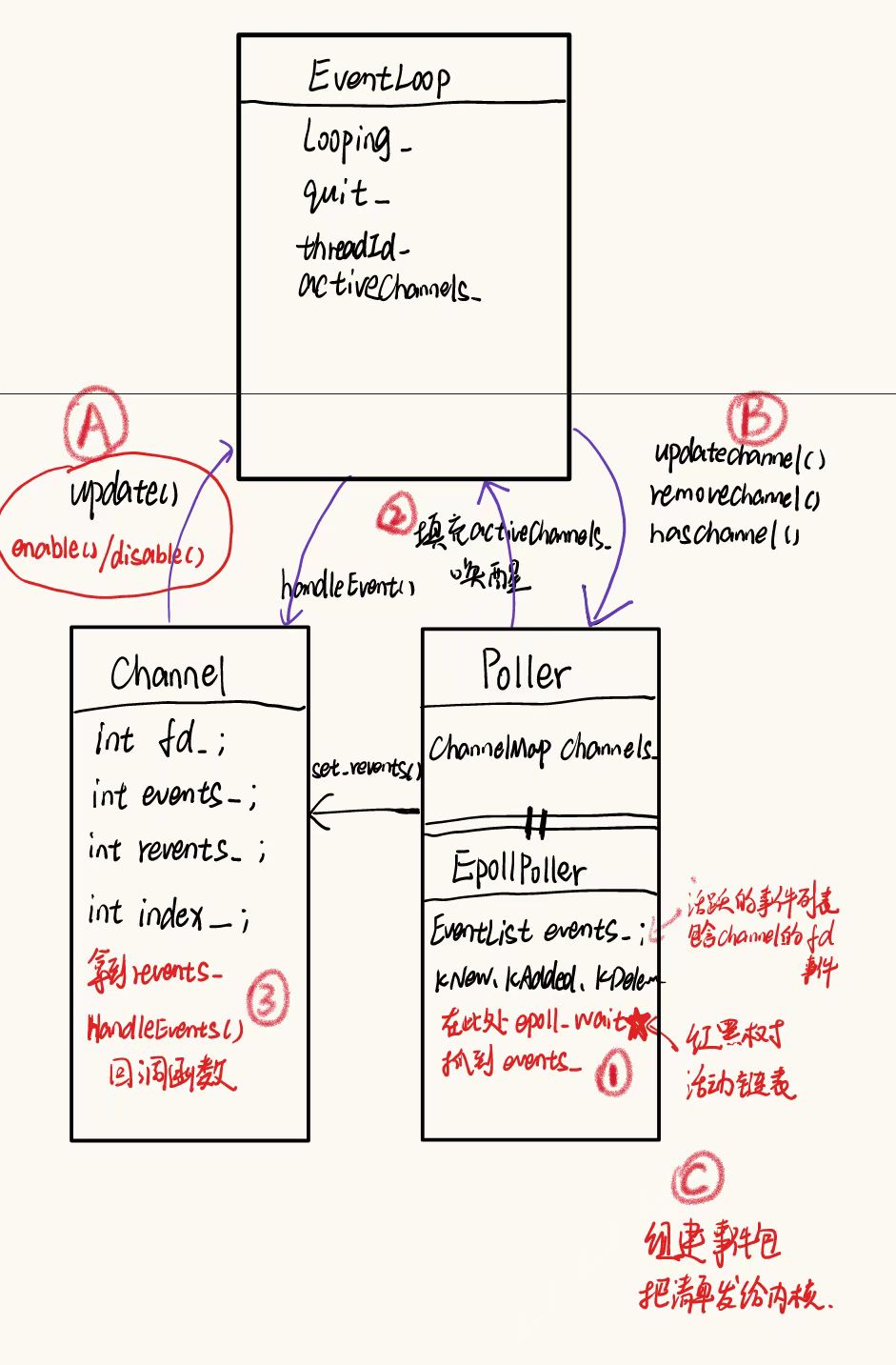
每个 socket 都对应一个 Channel,Channel 选择监听哪些信息,但是 Channel 本身不负责监听,他只是列个表,然后由 Poller 监听 socket 是否传输了表中的内容。 Poller 监听到之后,再汇报给 EventLoop,EventLoop 拿到 activeChannels 清单,对照着清单一一唤醒Channels Channel 被唤醒之后,再去叫别的类去进行接下来的操作 我们不直接拿 Channel 去监听 socket,因为这样的话,一万个 scoket 就对应一万个 Channel,每个 Channel 始终监视着 socket,会占用极大的内存 我们用One Loop Per Thread(一个线程一个循环)原则,能让一个线程同时处理成千上万的链接
Channel.h#
#pragma once

#include "NonCopyable.h"
#include <functional>
#include <memory>

class EventLoop;

class Channel : NonCopyable
{
public:
    using EventCallback = std::function<void()>;

    Channel(EventLoop* loop, int fd);
    ~Channel();

    void handleEvent();

    void setReadCallback(EventCallback cb) { readCallback_ = std::move(cb); }
    void setWriteCallback(EventCallback cb) { writeCallback_ = std::move(cb); }
    void setErrorCallback(EventCallback cb) { errorCallback_ = std::move(cb); }
    void setCloseCallback(EventCallback cb) { closeCallback_ = std::move(cb); }


    int index() { return index_; }
    void set_index(int idx) { index_ = idx; }

    int fd() const { return fd_; }
    //获取我要关注的事件都有哪些
    int events() const { return events_; }

    void set_revents(int revt) { revents_ = revt; }

    bool isNoneEvents() const { return events_ == kNoneEvent; }

    //自己更新,然后再让EventLoop去更新Poller
    void enableReading() { events_ |= kReadEvent; update(); }
    void disableReading() { events_ &= ~kReadEvent; update(); }
    void enableWriting() { events_ |= kWriteEvent; update(); }
    void disableWriting() { events_ &= ~kWriteEvent; update(); }
    void disableAll() { events_ = kNoneEvent; update(); }

    //你开启监听/写入了吗
    bool isWriting() const { return events_ & kWriteEvent; }
    bool isReading() const { return events_ & kReadEvent; }

private:
    void update();

    static const int kNoneEvent;
    static const int kReadEvent;
    static const int kWriteEvent;

    EventLoop* loop_;
    const int fd_;

    int events_;
    int revents_;

    //表示channel在Poller中的状态
    int index_;

    EventCallback readCallback_;
    EventCallback writeCallback_;
    EventCallback errorCallback_;
    EventCallback closeCallback_;
};Channel.cc#
#include "Channel.h"
#include "EventLoop.h"
#include <sys/epoll.h>
#include <iostream>

const int Channel::kNoneEvent = 0;
const int Channel::kReadEvent = EPOLLIN | EPOLLPRI;
const int Channel::kWriteEvent = EPOLLOUT;

Channel::Channel(EventLoop* loop, int fd)
    : loop_(loop),
      fd_(fd),
      events_(0),
      revents_(0),
      index_(-1)
{}

Channel::~Channel()
{

}

void Channel::update()
{
    loop_->updateChannel(this);

    std::cout<<"Channel updated: fd="<< fd_ << " events="<<events_<<std::endl;

}

void Channel::handleEvent()
{
    std::cout << "Channel::handleEvent revents: " << revents_ << std::endl;

    if((revents_ & EPOLLHUP) && !(revents_ & EPOLLIN))
    {
        if(closeCallback_) closeCallback_();
    }

    if(revents_ & EPOLLERR)
    {
        if(errorCallback_) errorCallback_();
    }

    if(revents_ & (EPOLLIN | EPOLLPRI))
    {
        if(readCallback_) readCallback_();
    }

    if(revents_ & EPOLLOUT)
    {
        if(writeCallback_) writeCallback_();
    }

}可以看出,Channel 的作用就是设置自己需要响应的事件、响应事件 讲几个点:
kReadEvent#
其中 k 是 const 的缩写,代码中是这么定义的:
const int Channel::kNoneEvent = 0;

const int Channel::kReadEvent = EPOLLIN | EPOLLPRI;

const int Channel::kWriteEvent = EPOLLOUT;这其实相当于 01 开关,通过位运算来控制我们监听的事件,这么用:
	void enableReading() { events_ |= kReadEvent; update(); }

    void disableReading() { events &= ~kReadEvent; update(); }

    void enableWriting() { events_ |= kWriteEvent; update(); }

    void disableWriting() { events_ &= ~kWriteEvent; update(); }

void disableAll() { events_ = kNoneEvent; update(); }这样来添加或者删减 Channel 监听的类型
update ()#
其实只需要明确一点就明白了: Channel 的 events 是自己想要监听的内容,但是需要把这个内容发给 Poller,由他来监听,自然需要 update 一下了
🌟Poller 类、EpollPoller 类#
Poller 提供接口,EpollPoller 提供底层逻辑
用处:#
- 轮询(epoll_wait),直到有活动 channel,抓取到
activeChannels列表,把当前事件传给每个 channel 的revents_;唤醒 EventLoop,EventLoop 去让列表中的 channels 去handleEvent() - 维护 epoll 红黑树,其中维护的是 channel 的 fd、指针、愿望清单
Poller.h#
#pragma once

#include "NonCopyable.h"
#include <vector>
#include <unordered_map>

class Channel;
class EventLoop;

class Poller : NonCopyable
{
public:
    using ChannelList = std::vector<Channel*>;

    Poller(EventLoop* loop);
    virtual ~Poller();

    //不停轮询,寻找active的channel
    virtual void poll(int timeoutMs, ChannelList* activeChannel) = 0;

    //更新channel的愿望清单
    virtual void updateChannel(Channel* channel) = 0;

    //移除channel
    virtual void removeChannel(Channel* channel) = 0;

    //有没有这个Channel
    bool hasChannel(Channel* channel) const;

    static Poller* newDefaultPoller(EventLoop* loop);

protected:
    //维护Poller的监听channel都有哪些
    //channel的fd和channel本身指针作对应
    using ChannelMap = std::unordered_map<int, Channel*>;
    ChannelMap channels_;//由Poller负责

private:
    EventLoop* loop_;
};
/*
Poller:
1、维护监听的channel列表
2、轮询,看哪些channel active了
*/Poller.cc#
#include "Poller.h"
#include "EpollPoller.h"
#include "Channel.h"

Poller::Poller(EventLoop* loop)
    : loop_(loop)
{}

Poller::~Poller() = default;

bool Poller::hasChannel(Channel* channel) const
{
    auto it = channels_.find(channel->fd());
    return it != channels_.end() && it->second == channel;
}

Poller* Poller::newDefaultPoller(EventLoop* loop)
{
    return new EpollPoller(loop);
}EpollPoller.h#
#pragma once

#include "Poller.h"
#include <vector>
#include <sys/epoll.h>

class EpollPoller : public Poller
{
public:
    EpollPoller(EventLoop* loop);
    ~EpollPoller() override;

    void poll(int timeoutMs, ChannelList* activeChannels) override;
    void updateChannel(Channel* channel) override;
    void removeChannel(Channel* channel) override;

private:
    //填activeChannels
    void fillActiveChannel(int numEvents, ChannelList* activeChannels) const;
    //具体的在epoll中更新channel愿望清单的方式
    void update(int operation, Channel* channel);

    int epollfd_;

    //即将发生事件的列表
    using EventList = std::vector<struct epoll_event>;
    EventList events_;

    //Channel在Poller中的状态
    static const int kNew;//没有在红黑树注册过
    static const int kAdded;//注册了,且在工作
    static const int kDeleted;//注册了,但是没有在工作
};

/*
EpollPoller:
使用epoll进行活跃channel的维护
1、维护channel在epoll中的状态
2、找到活跃的channel
*/EpollPoller.cc#
#include "EpollPoller.h"
#include "Channel.h"
#include <iostream>
#include <unistd.h>
#include <string.h>

const int EpollPoller::kNew = -1;
const int EpollPoller::kAdded = 1;
const int EpollPoller::kDeleted = 2;

/*
epoll是socket管理器,用的是红黑树
每一个节点存了一份详细的监听清单,对应一个socket
节点中有:
1、节点信息,包含父子节点指针以及颜色(struct rb_node rbn)
2、socket的fd以及对应的指针(struct epoll_filefd ffd)
3、关注的事件,存用户关注的事件(struct epoll_event event)
4、就绪链表指针,socket活跃时就把这个指针挂载到就绪链表中(struct list_head rdllink)
5、等待队列项,这里面设置了回调函数,用来触发挂载到活跃链表的操作 (wait_queue_t pwq)
6、容器引用,指向节点所属的epoll实例 (struct eventpoll *ep)
*/

EpollPoller::EpollPoller(EventLoop* loop)
    : Poller(loop),
      epollfd_(::epoll_create1(EPOLL_CLOEXEC)),
      events_(16)
{
    if(epollfd_ < 0)
    {
        perror("epoll_create1 error");
    }
}


EpollPoller::~EpollPoller()
{
    ::close(epollfd_);
}

//轮询的逻辑
void EpollPoller::poll(int timeoutMs, ChannelList* activeChannels)
{
    //把epoll中的活跃socket填到events_,再返回活跃数量
    //events_是using EventList = std::vector<struct epoll_event>类型的
    int numEvents = ::epoll_wait(epollfd_,
                                 &*events_.begin(),
                                 static_cast<int>(events_.size()),
                                 timeoutMs);

    int saveErrno = errno;

    if(numEvents>0)
    {
        fillActiveChannel(numEvents, activeChannels);

        //已经把这个events_列表填满了
        if(numEvents == static_cast<int>(events_.size()))
        {
            events_.resize(events_.size()*2);
        }
    }
    else if(numEvents==0)
    {
        std::cout << "nothing happened" << std::endl;
    }
    else
    {
        //假如不是interrupt(自行暂停),那就是真出错了
        if(saveErrno != EINTR)
        {
            perror("EpollPoller::poll Error!");
        }
    }
}

//填充activeChannels,这些channels活跃了,要处理事件了
void EpollPoller::fillActiveChannel(int numEvents, ChannelList* activeChannels) const
{
    for(int i=0;i<numEvents;i++)
    {
        Channel* channel = static_cast<Channel*>(events_[i].data.ptr);

        channel->set_revents(events_[i].events);

        activeChannels->push_back(channel);
    }
}

//把channel的清单更新同步到内核中(channel活跃了)
void EpollPoller::updateChannel(Channel* channel)
{
    //看看状态是啥,怎么更新
    const int index = channel->index();

    if(index==kNew||index==kDeleted)//epoll里没有这个channel,加进来
    {
        if(index==kNew)
        {
            int fd = channel->fd();
            channels_[fd] = channel;
        }

        channel->set_index(kAdded);
        update(EPOLL_CTL_ADD, channel);
    }
    else//kAdded,有了,更新一下清单
    {
        if(channel->isNoneEvents())
        {
            update(EPOLL_CTL_DEL,channel);
            channel->set_index(kDeleted);
        }
        else
        {
            update(EPOLL_CTL_MOD, channel);
        }
    }
}

void EpollPoller::removeChannel(Channel* channel)
{
    int fd = channel->fd();
    channels_.erase(fd);

    int index = channel->index();
    if(index == kAdded)
    {
        update(EPOLL_CTL_DEL, channel);
    }
    //Channel被移除了,直接注销了
    channel->set_index(kNew);
}

//具体怎么更新?
void EpollPoller::update(int operation, Channel* channel)
{
    //组装事件包
    struct epoll_event event;
    bzero(&event, sizeof event);

    event.events = channel->events();
    event.data.ptr = channel;

    int fd = channel->fd();
    //把愿望清单发给内核
    if (::epoll_ctl(epollfd_, operation, fd, &event) < 0)
    {
        perror("epoll_ctl error");
    }

}🌟EventLoop 类#
这个类主要起到命令别的类的作用,操控者程序的主循环。被 Poller 唤醒,再让 Channel 处理事件;Channel 让 EventLoop 更新 Channel 自己的愿望清单,EventLoop 让 Poller 更新愿望清单
EventLoop.h#
#pragma once

#include <vector>
#include <atomic>
#include <memory>

#include "NonCopyable.h"
#include "Timestamp.h"
#include "CurrentThread.h"

class Channel;
class Poller;

class EventLoop : NonCopyable
{
public:
    using ChannelList = std::vector<Channel*>;

    EventLoop();
    ~EventLoop();

    void loop();

    void quit();

    void updateChannel(Channel* channel);
    void removeChannel(Channel* channel);
    bool hasChannel(Channel* channel);

    bool isInLoopThread() const;

private:
    void abortNotInLoopthread();

    std::atomic_bool looping_;
    std::atomic_bool quit_;

    const pid_t threadId_;

    std::unique_ptr<Poller> poller_;
    ChannelList activeChannels_;
};EventLoop.cc#
#include "EventLoop.h"
#include "Poller.h"
#include "Channel.h"
#include "CurrentThread.h"
#include <iostream>

__thread EventLoop* t_loopInThisThread = nullptr;

const int kPollTimeMs = 100000;
EventLoop::EventLoop()
    : looping_(false),
     quit_(false),
     threadId_(CurrentThread::tid()),
     poller_(Poller::newDefaultPoller(this))
{
    std::cout << "EventLoop created " << this << " in thread " << threadId_ << std::endl;

    if(t_loopInThisThread)
    {
        std::cerr << "Another EventLoop " << t_loopInThisThread
                  << " exists in this thread " << threadId_ << std::endl;
        exit(1); // 严禁一个线程搞两个 Loop
    }
    else
    {
        t_loopInThisThread = this;
    }
}

EventLoop::~EventLoop()
{
    looping_ = false;
    t_loopInThisThread = nullptr;
}

void EventLoop::loop()
{
    looping_ = true;
    quit_ = false;

    std::cout << "EventLoop " << this << " start looping" << std::endl;

    while(!quit_)
    {
        activeChannels_.clear();

        poller_->poll(kPollTimeMs,&activeChannels_);

        for(Channel* channel : activeChannels_)
        {
            channel->handleEvent();
        }
    }

    std::cout << "EventLoop " << this << " stop looping" << std::endl;
    looping_=false;
}

void EventLoop::quit()
{
    quit_=true;
}

void EventLoop::updateChannel(Channel* channel)
{
    if(isInLoopThread())
    {
        poller_->updateChannel(channel);
    }
    else
    {
        std::cerr << "EventLoop::updateChannel called from different thread!" << std::endl;
    }
}

void EventLoop::removeChannel(Channel* channel)
{
    if(isInLoopThread())
    {
        poller_->removeChannel(channel);
    }
}

bool EventLoop::hasChannel(Channel* channel)
{
    return poller_->hasChannel(channel);
}

bool EventLoop::isInLoopThread() const
{
    return threadId_ == CurrentThread::tid();
}整体流程图:#